
The Legal Engineering of Jim Crow
This article examines how Jim Crow segregation was constructed and sustained through court rulings and legislation rather than custom alone. It highlights key Supreme Court decisions, state laws, and administrative policies that legalized racial separation and weakened federal protections after Reconstruction. Drawing on court records, legislative archives, and historical reports, the piece shows how inequality was deliberately written into law—and how those legal foundations shaped generations of American life.
2/16/20261 min read
The Legal Engineering of Jim Crow
Jim Crow segregation was not a cultural accident or a spontaneous social practice—it was carefully engineered through law and the courts. After the Civil War, the Reconstruction Amendments (13th, 14th, and 15th) were designed to secure freedom, citizenship, and voting rights for formerly enslaved Black Americans. For a brief period, federal enforcement made these rights real.
That changed in the late 19th century.
A series of Supreme Court decisions steadily dismantled federal civil rights protections. The most devastating was United States v. Cruikshank, which ruled that the federal government could not prosecute individuals for civil rights violations, even in cases of racial terror. This decision followed the Colfax Massacre and effectively removed federal protection for Black citizens.
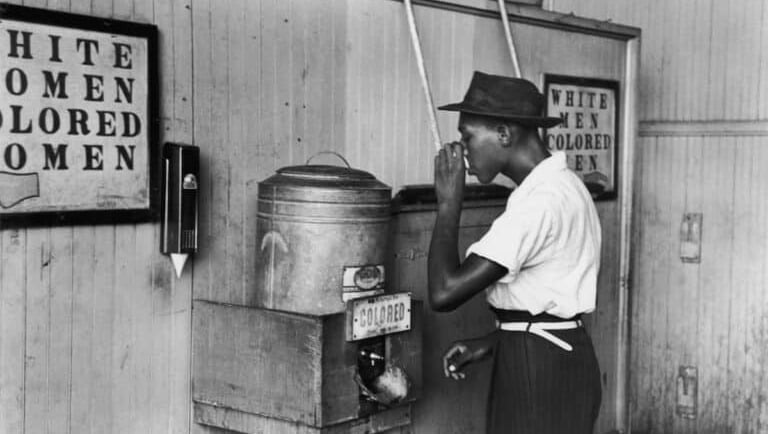
In 1896, the Court sealed segregation into law with Plessy v. Ferguson, which upheld the doctrine of “separate but equal.” This ruling legalized segregation nationwide, allowing states to enforce racial separation in schools, transportation, housing, and public life—despite clear inequality.
State legislatures followed with poll taxes, literacy tests, grandfather clauses, and segregation statutes. Courts upheld these laws, giving Jim Crow a legal backbone that lasted for decades. Violence enforced the system, but law legitimized it.
Why is this often underemphasized? Because it reveals an uncomfortable truth: Jim Crow was not merely enforced by mobs—it was authorized by America’s highest legal institutions. Court opinions, statutes, and legal records make this undeniable.
Jim Crow was built deliberately, defended legally, and dismantled only through sustained struggle. The evidence is written not just in memory, but in law books themselves.