
Fort Mose: America’s First Free Black Settlement
Blog post description.
6/28/20262 min read
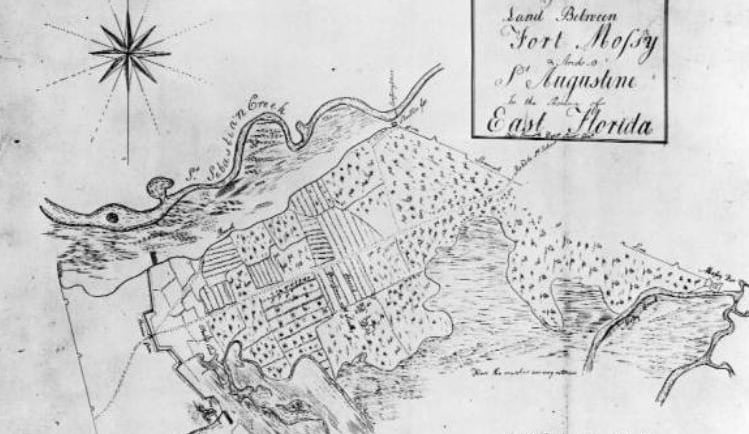
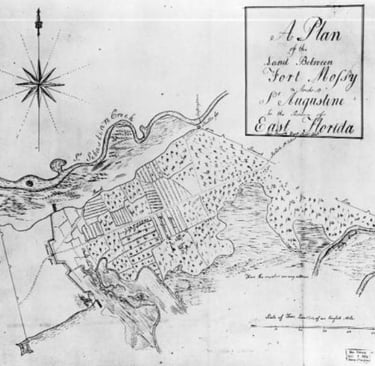
Fort Mose: America’s First Free Black Settlement
Before the United States existed, before the Revolution, and long before 1865, there was Fort Mose—a sovereign Black town built on freedom, law, and resistance.
In 1738, just north of St. Augustine in Spanish Florida, formerly enslaved Africans established Gracia Real de Santa Teresa de Mose, commonly known as Fort Mose. Under Spanish rule, Africans who escaped British slavery were granted freedom if they converted to Catholicism and pledged loyalty to Spain. What emerged was not a refugee camp, but a legally chartered free Black settlement with its own militia, families, farms, and leadership.
This was a deliberate act of policy and power. Spain understood that freedom could be weaponized against British slavery, and Fort Mose became a strategic buffer protecting St. Augustine—the oldest European city in what is now the United States. Black residents were not merely inhabitants; they were defenders, soldiers, and citizens within Spanish law.
The evidence is indisputable. Spanish colonial archives preserve the original charter authorizing the settlement. Military records document Black militia units commanded by formerly enslaved Africans. Archaeological excavations at the site—now a Florida State Park—have uncovered fortifications, musket balls, pottery, food remains, and domestic artifacts that confirm daily life in a permanent, organized community.
Yet Fort Mose rarely appears in standard U.S. history textbooks.
Why was it hidden? Because Fort Mose disrupts the dominant narrative that Black freedom in America began with emancipation in 1865. It proves that Black sovereignty, self-governance, and armed defense existed more than a century earlier—and under conditions that directly challenged British colonial slavery.
Even more unsettling to the mainstream story is this: Fort Mose shows that freedom on American soil did not originate from the United States itself, but from Africans choosing escape, alliance, and self-determination within competing colonial empires. Black people were not waiting to be freed; they were already building free societies when the colonies that became the U.S. were still enslaving them.
Fort Mose was eventually destroyed during conflicts between Spain and Britain, rebuilt, abandoned, and then forgotten—until archaeology and archives forced its return to memory. Today, the land stands quiet, but its truth is loud.
Hidden Records exists for stories like this.
Stories that are not myths.
Stories with documents.
Stories written in maps, soil, and law.
Fort Mose was real.
And it changes everything we think we know about freedom in America.